Wetland ecology and marsh birds
Transport of contaminants by black-headed gulls
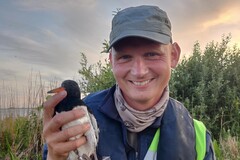
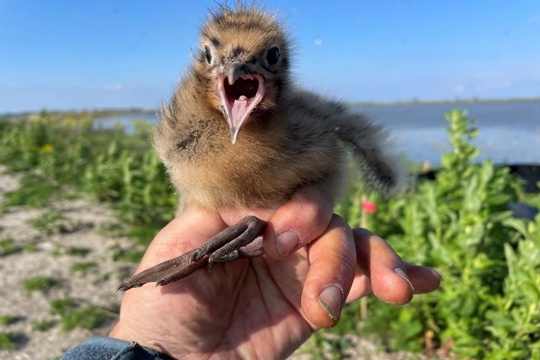
Marker Wadden is home to the largest colony of black-headed gulls in the Netherlands, with more than 15,000 breeding pairs. Although the birds nest on the archipelago, they forage mainly in surrounding agricultural and urban areas. A pilot study indicates that black-headed gulls are able to transport PFAS and heavy metals, such as lead, cadmium, and arsenic, into natural ecosystems. Analyses of food remains and chick droppings revealed elevated concentrations of these substances. The results indicate that black-headed gulls play an important role in connecting urban, agricultural, and natural environments, highlighting the need for further research into the transport of contaminants by birds to vulnerable natural areas.
Network members
Other Wetland ecology and marsh birds projects
- Conservation of the great reed warbler in the Netherlands
- Potential habitat for great reed warbler in National Park Weerribben and Wieden
- Effects of goose grazing on marsh vegetation
- Great reed warblers in the Reeuwijkse Plassen
- Restoring wetlands in the Reeuwijkse Plassen
- Area agreement Eastern Vechtplassen
- Conservation of black terns in Zuid-Holland
- Black tern nest predation study
- Rietkwaliteit en voedselrijkdom
- Eutrofe moerassen: landbouw naar natuur
Lowland Ecology Network
The Lowland Ecology Network is a network of freelancers who focus on ecological research, advice and communication. The emphasis is on nature protection of wetlands at home and abroad. Each participant has specific expertise and as a network we can respond fast and quickly solve complex issues. We are wel connected with experts on subjects such as photography / film, design and nature legislation.
Network members